Tell us about the job
Takes about a minute. No obligation.
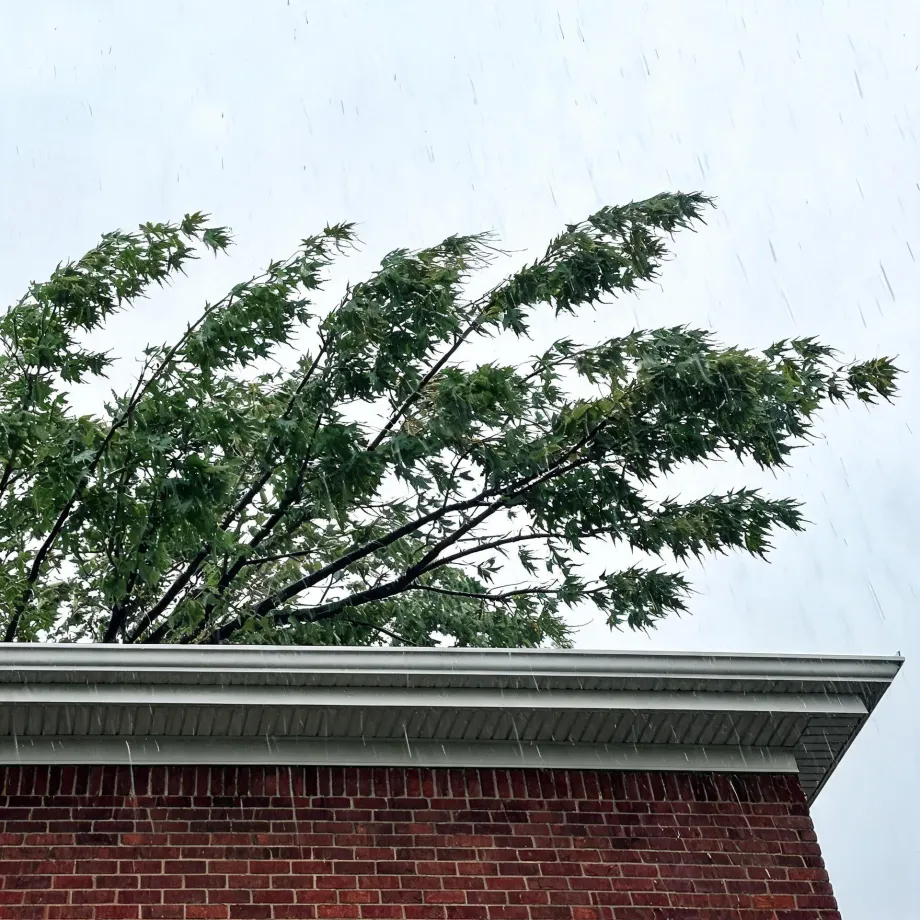
A contractor quoting a mini-split install here has to get the sizing right before anything else, because a unit that is even slightly undersized will be running at or near its ceiling every time the weather turns serious. 209 severe weather events were recorded in Susquehanna County, Pennsylvania between 2015 and 2024. At that rate of severe weather, the system earns its wear steadily rather than in occasional spikes, and a unit that was never sized for actual local demand will show the strain years sooner than one that was. The quality of the refrigerant line set, the mounting location, and the electrical supply all carry more consequence here than they would somewhere the load is lighter.
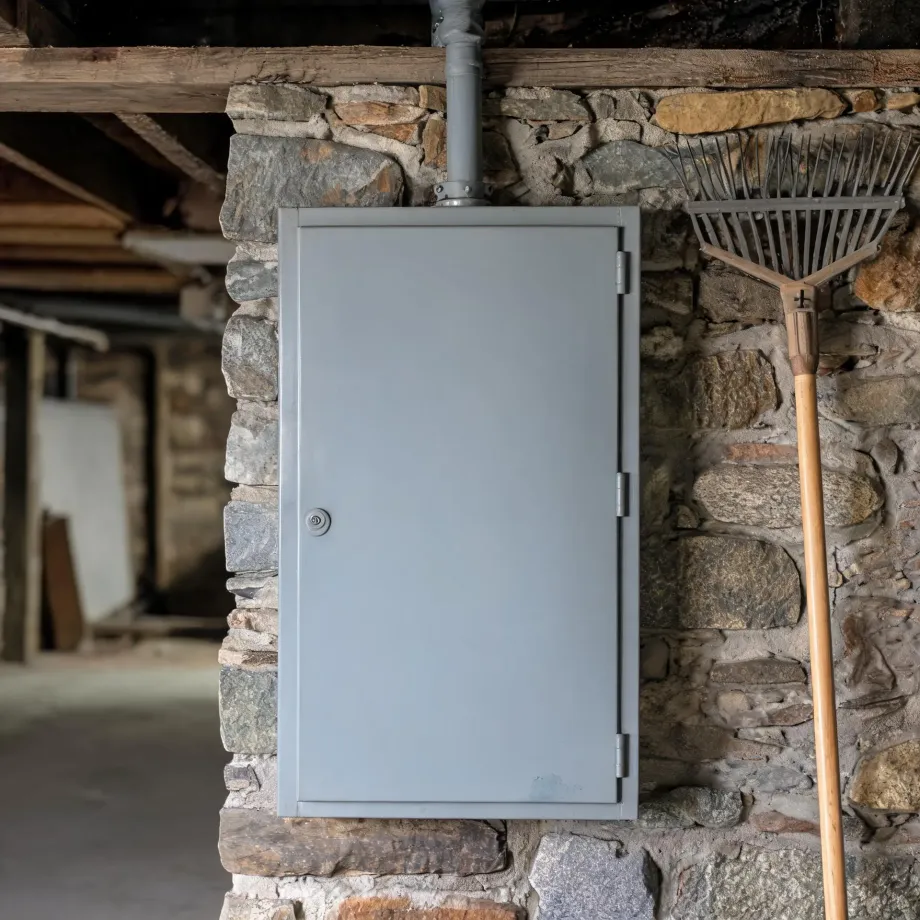
Older electrical panels in this county's housing stock were sized for what appliances of their day drew, and a mini-split's dedicated circuit requirements can land outside what that original service will support without an upgrade. Half the homes in Susquehanna County, Pennsylvania were built in 1975 or earlier (2020-2024 ACS 5-year). A contractor pricing a mini-split installation here looks at the panel before the equipment, because what the panel can actually deliver sets the boundary for what gets quoted and whether that quote expands before the job is done.
What a Mini-split Installation Puts in Your Home
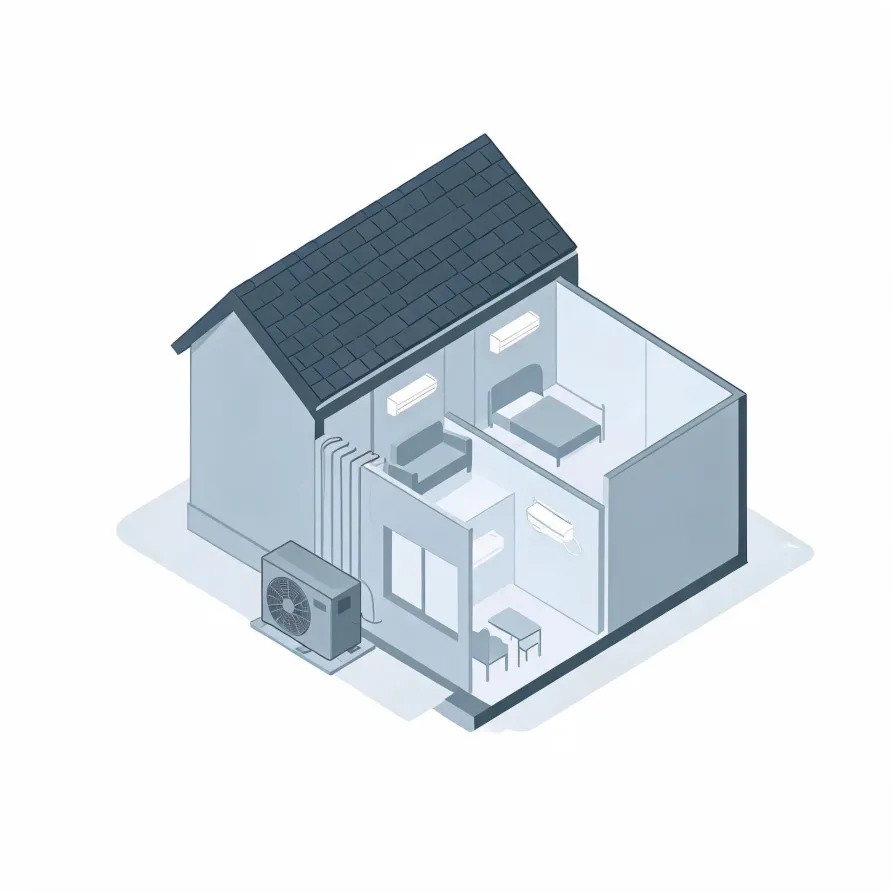
The indoor air handler mounts high on a wall inside the room and does the work the homeowner sees and feels every day. Outside, the condenser unit sits on a pad or bracket and houses the compressor and fan that drive the whole system. Each indoor unit serves the zone it is placed in.
A refrigerant line set runs through a small opening in the wall to connect the indoor and outdoor units, carrying the working fluid between them. A condensate drain line runs alongside it to carry moisture away from the air handler. A dedicated electrical line feeds the outdoor unit.
The drawing shows a typical layout, and a licensed contractor determines exactly how each component is positioned and routed in your home.
Find a contractor in Susquehanna CountySusquehanna County, by the numbers
209 severe weather events were recorded in Susquehanna County, Pennsylvania between 2015 and 2024.
NOAA National Centers for Environmental Information, Storm Events Database, bulk CSV export, events 2015-01-01 through 2024-12-31.Half the homes in Susquehanna County, Pennsylvania were built in 1975 or earlier (2020-2024 ACS 5-year).
U.S. Census Bureau, 2020-2024 American Community Survey 5-Year EstimatesSusquehanna County, Pennsylvania holds 21,348 housing units (2020-2024 ACS 5-year).
U.S. Census Bureau, 2020-2024 American Community Survey 5-Year EstimatesOwners occupy 78.5% of the occupied homes in Susquehanna County, Pennsylvania (2020-2024 ACS 5-year).
U.S. Census Bureau, 2020-2024 American Community Survey 5-Year EstimatesMini-Split Installation Rules for Susquehanna County, Pennsylvania3 sourced standards and codes
What Susquehanna County, Pennsylvania Requires for This Work
Pennsylvania names the trade in its own definition: installing central heating or air conditioning is a home improvement under the Act, whether or not the equipment is affixed — so an HVAC installation is work the registration requirement reaches.
A Pennsylvania registration displaces the local one: no political subdivision may require a home improvement contractor to register, license or pay a fee on top of it, though building permits and local code enforcement still apply.
Pennsylvania requires home improvement contractor registration rather than a licence: nobody may hold themselves out as a contractor, or perform any home improvement, without first registering with the Bureau of Consumer Protection.
Severe Weather Events in Susquehanna County
Heating and cooling equipment in Susquehanna County works against whatever the local climate delivers, and that workload shapes what a properly sized and installed mini-split needs to handle. A contractor who knows this area sizes for real conditions, not a generic mid-Atlantic baseline.
209 severe weather events, 2015–2024. Source: NOAA National Centers for Environmental Information, Storm Events Database.